Missing teeth can affect your ability to eat, speak, and smile with confidence. When you lose a tooth, you need a reliable replacement option that fits your lifestyle and oral health needs.
The right choice between a dental implant and a bridge depends on your bone health, budget, timeline, and long-term goals. Both options can restore your smile, but they work differently and offer distinct advantages.
What Are Dental Implants & Bridges?
Dental Implants: The Complete Tooth Replacement
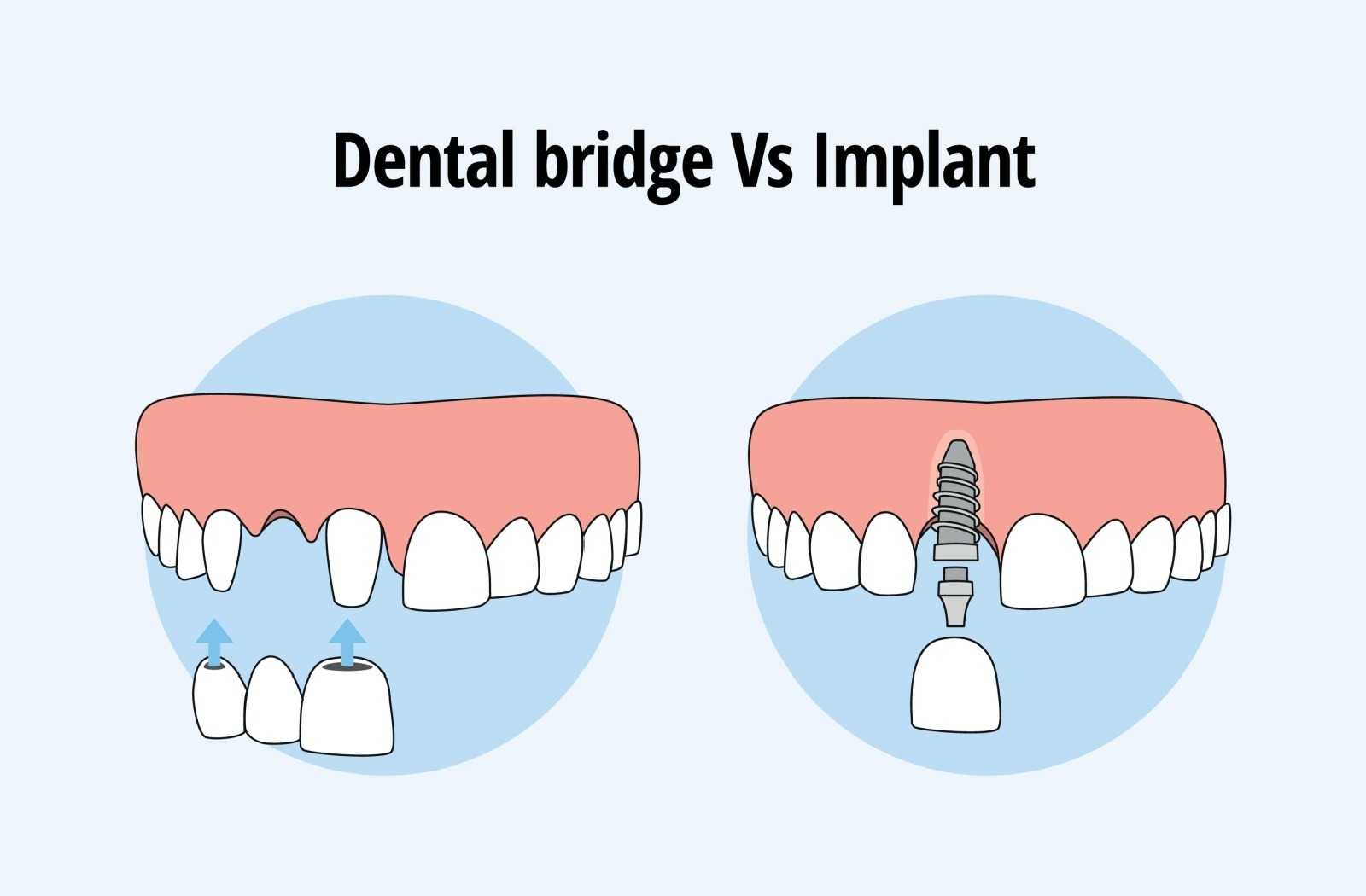
A dental implant replaces your entire tooth from root to crown. The dentist places a titanium post into your jawbone where your natural tooth root used to be.
Your bone grows around this post over several months, creating a strong foundation. Once healed, the dentist attaches a crown that looks and functions like your natural tooth.
Dental Bridges: Connecting the Gap
A dental bridge spans the gap where your missing tooth used to be. The bridge consists of a replacement tooth connected to crowns that fit over the teeth on either side of the gap.
Your dentist prepares the adjacent teeth by removing some enamel to make room for the crowns. The entire bridge becomes a single, connected piece that fills the space left by your missing tooth.
When You Might Need Either Option
You’re a candidate for tooth replacement if you have one or more missing teeth that affect your eating, speaking, or appearance. Both implants and bridges work for single missing teeth or multiple adjacent missing teeth.
Your dentist can evaluate your specific situation and discuss which option suits your oral health and personal preferences.
How Do Implants & Bridges Compare?
Durability & Longevity Differences
Dental implants typically last 20 years or more with proper care and regular dental visits. The titanium post can last a lifetime, though you may need crown replacement after 15-20 years.
Bridges generally need to be replaced every 10-15 years. The supporting teeth bear extra pressure, which can affect the bridge’s lifespan over time.
Appearance & Natural Look
Both implants and bridges can look natural when properly made and placed. Implants emerge from your gum line just like natural teeth, creating a seamless appearance.
Bridges also provide natural-looking results, though the connected design may be slightly more noticeable during close examination.
Impact on Surrounding Teeth
Implants don’t affect your healthy adjacent teeth. The implant stands independently and doesn’t require support from neighbouring teeth.
Bridges require reshaping the teeth on either side of the gap to accommodate the supporting crowns, possibly removing healthy tooth structure that can’t be replaced.
Maintenance Requirements
You can brush and floss around an implant just as you would a natural tooth. Regular cleaning appointments help maintain your implant and surrounding tissues.
Bridges may require specialized flossing techniques and tools to clean beneath the replacement tooth. Food particles can sometimes get trapped in hard-to-reach areas.
Benefits & Drawbacks of Dental Implants
Why Implants Are Often the Preferred Choice
- Preserve jawbone structure
- Don’t affect healthy adjacent teeth
- Last 20+ years with proper care
- Feel & function like natural teeth
Implants stimulate your jawbone just like natural tooth roots, helping to prevent bone loss that typically occurs after tooth extraction.
When Implants May Not Be Right for You
- Insufficient bone density
- Certain medical conditions
- Longer treatment timeline
- Higher upfront cost
Some people need additional procedures, such as bone grafting, before implant placement. Your dentist can evaluate your bone health and discuss any necessary preparatory treatments.
Benefits & Drawbacks of Dental Bridges
Why Bridges Can Be a Good Solution
- Faster treatment completion
- Lower initial investment
- No surgical procedure required
- Restore function quickly
You can complete bridge treatment in just a few weeks. This makes bridges appealing when you need quick results or have time constraints.
Potential Downsides of Bridges
- Require altering healthy teeth
- Need replacement every 10-15 years
- More difficult to clean properly
- Bone loss may continue
Bridge replacement costs can add up over time. You’ll also need to replace the entire bridge if any part fails or if the supporting teeth develop problems.
Which Option Fits Your Situation?

Questions to Ask Yourself
Consider how long you want your tooth replacement to last and whether you’re comfortable with surgical procedures. Think about your daily oral hygiene routine and whether you’re willing to adapt it for special cleaning requirements.
Your age and overall health also play a role in determining the right choice for your situation.
Cost Considerations Over Time
Implants cost more initially but may save money over the long term due to their longevity. Bridges have lower upfront costs but require periodic replacement throughout your lifetime.
Your dental insurance coverage may vary by option, so check your benefits before making a decision.
Your Oral Health Status
Healthy adjacent teeth make you a good candidate for implants since you won’t need to alter them. If the neighbouring teeth already need crowns or have large fillings, a bridge might address multiple issues simultaneously.
Your gum health and bone density also influence which option works better for your mouth.
Treatment Process: What to Expect
Implant Placement Timeline
Implant treatment typically takes 3 to 6 months from start to finish. You’ll have the implant placed first, then wait for your bone to heal and integrate with the titanium post.
Once healing is complete, your dentist can attach your permanent crown, and you can return to normal eating habits.
Bridge Creation & Fitting Process
Bridge treatment usually takes 2 to 4 weeks to complete. Your dentist prepares the supporting teeth and takes impressions during your first visit.
You’ll wear a temporary bridge while your permanent bridge is made, then return for final placement and adjustments.
Recovery & Healing Expectations
Implant recovery involves some initial soreness that typically resolves within a few days. You’ll need to avoid hard foods during the healing period.
Bridge placement involves minimal recovery time since there’s no surgical component. You may experience some sensitivity in the supporting teeth that usually subsides quickly.
Getting Care in Chatham with Grand West Dental
Comprehensive Evaluation
Your treatment starts with a thorough examination to assess your oral health, bone structure, and individual needs. Your dentist can take X-rays and discuss your preferences to help determine the right approach, identifying any additional treatments you may need before tooth replacement.
Referral Options for Specialized Treatment
Grand West Dental works closely with nearby practices that focus on implant placement when you choose the implant option. Our collaborative approach helps coordinate your care and timeline efficiently, and allows you to access other specialized services such as custom dentures when needed.
Grand West Dental has served the Chatham community since 1977, helping families make informed decisions about their oral health. Contact the practice today to schedule a consultation and explore your tooth replacement options.