You might have heard about partial dentures from our team at Grand West Dental in Chatham, Ontario. But understanding what they are and how they work can help you make informed decisions about your oral health. Many people with missing teeth wonder if partial dentures are the right solution for their specific situation, and we’re here to help guide you.
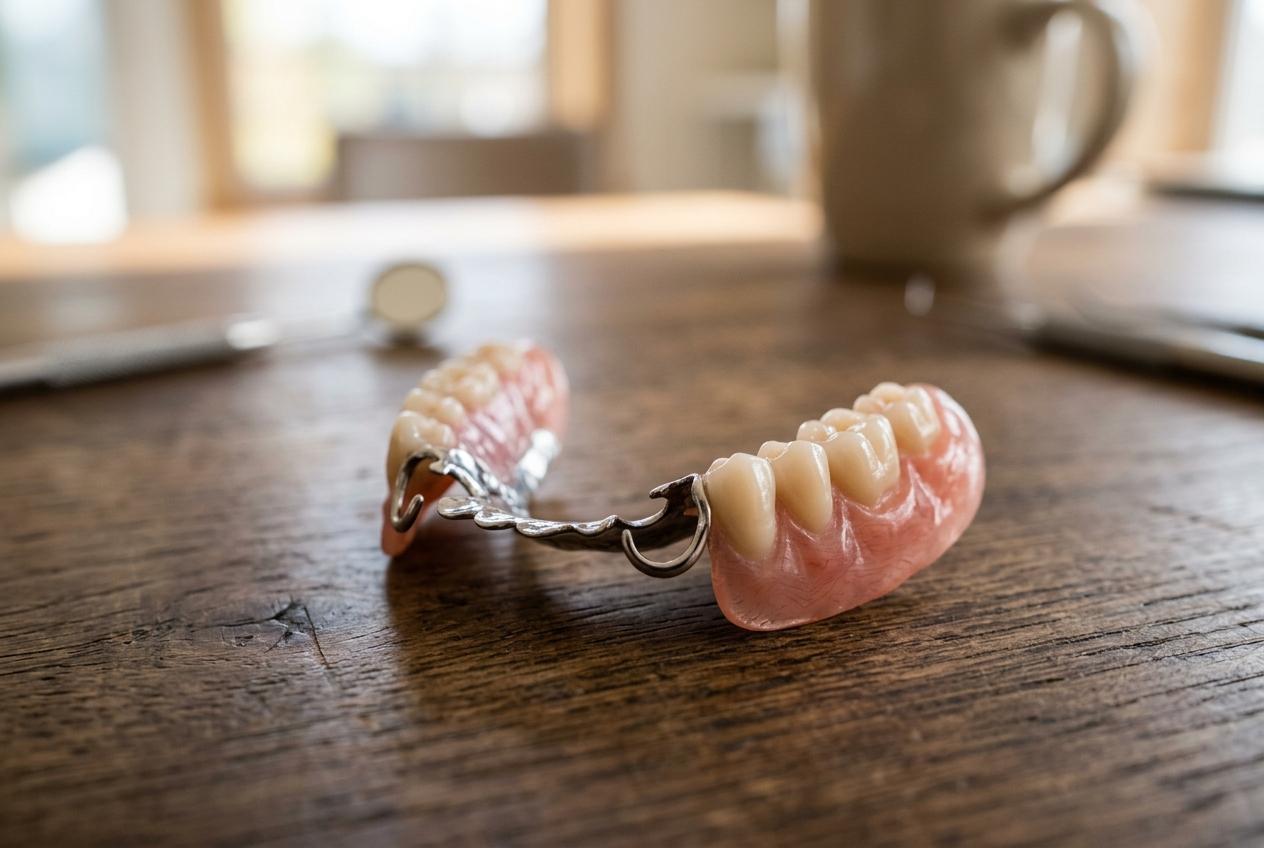
Partial dentures are removable dental appliances that replace some of your missing teeth while using your remaining natural teeth for support and stability. Unlike full dentures that replace an entire set of teeth, partial dentures fill in the gaps where you’ve lost individual teeth, helping restore your smile and mouth function.
Types of Partial Dentures & How They Work
When replacing some missing teeth, there are a couple of common options: Removable partial dentures or fixed options like dental bridges. Removable dentures use metal or plastic clasps that attach to your existing teeth for stability. These clasps hold the partial denture in place while you eat and speak, and you can take them out for cleaning.
Fixed options, also called bridges, attach to crowns placed on your natural teeth. The dentist cements these in place, so you can’t remove them at home. Your remaining teeth serve as anchors, supporting the replacement teeth that fill the empty spaces.
Difference Between Partial & Full Dentures
Partial dentures only replace the teeth you’ve lost, preserving your healthy natural teeth. If you still have some of your original teeth, partials can improve your smile without removing the teeth that are still strong and functional.
Full dentures replace every tooth in your upper or lower jaw when you’ve lost most or all of your natural teeth. Your remaining natural teeth can help support and stabilize partial dentures, helping them feel secure and comfortable.
Benefits & What to Expect Daily
Partial dentures can restore much of your natural chewing ability, which means you can enjoy most of the foods you love. You’ll likely notice improved bite strength compared to having gaps in your teeth, though it may take some time to adjust to the feeling of the appliance in your mouth.
Another benefit is that your remaining teeth are less likely to shift into the empty spaces when partials fill those gaps. This helps prevent your bite from changing and helps maintain the alignment of your other teeth. You may also find that your speech becomes clearer, particularly with words that were difficult to pronounce with missing teeth.
Eating with Partial Dentures
Start with softer foods like eggs, fish, and cooked vegetables during your first few weeks. Your mouth needs time to adapt to the partial dentures, and softer textures can make this adjustment period more comfortable.
Try to chew food on both sides of your mouth to keep your partials stable and prevent them from shifting. Very sticky foods, like caramel, or hard items, like ice cubes, can damage or dislodge your partials, so you’ll want to avoid them while you’re adjusting.
How Long Do Partial Dentures Last?

Most partial dentures can serve you well for 5 to 10 years with proper care and regular maintenance. The exact lifespan depends on how well you care for them, changes in your mouth, and the quality of materials used in their construction.
You may need periodic adjustments as your mouth changes over time. Your gums can reshape, and your remaining teeth might shift slightly, which may require the dentist to adjust the fit of your partials.
Signs You Need Replacement
Notice if your partials start slipping frequently or feel loose when you’re eating or talking. This usually means the fit has changed, and you need adjustments or possibly new partials.
Look for visible cracks, worn teeth, or broken clasps on your partials. Changes in your natural teeth, such as new cavities or gum disease, can also affect how your partials fit and function.
Care & Maintenance for Your Partials
Remove your partials after meals and rinse them under running water to remove food particles. Brush them gently with a soft toothbrush and mild soap or denture cleaner, avoiding regular toothpaste, which can be too abrasive.
Soak your partials overnight in a denture-cleaning solution to keep them moist and free of bacteria. Always brush and floss your remaining natural teeth carefully, paying attention to areas where the clasps contact your teeth.
Professional Maintenance
You still need to schedule regular dental checkups every 6 months, just like you did before dentures, to monitor both your partials and your natural teeth. This helps our dental team detect problems early and make minor adjustments before they become major issues.
Professional cleaning and adjustments help extend the life of your partials and keep your mouth healthy. Our dentist can also monitor changes in your oral health that might affect how your partials fit.
Book Your Smile Restoration in Chatham
Since 1977, Grand West Dental has helped Chatham families restore their smiles with personalized dental care. Our team works closely with the nearby Denture Centre to provide a comprehensive evaluation and determine if partial dentures are right for you. If you’re interested in exploring dentures for your smile restoration, we encourage you to schedule a consultation.