Losing a tooth changes more than your smile. You might notice food getting stuck, words sounding a little different, or a gap that makes you cover your mouth when you laugh.
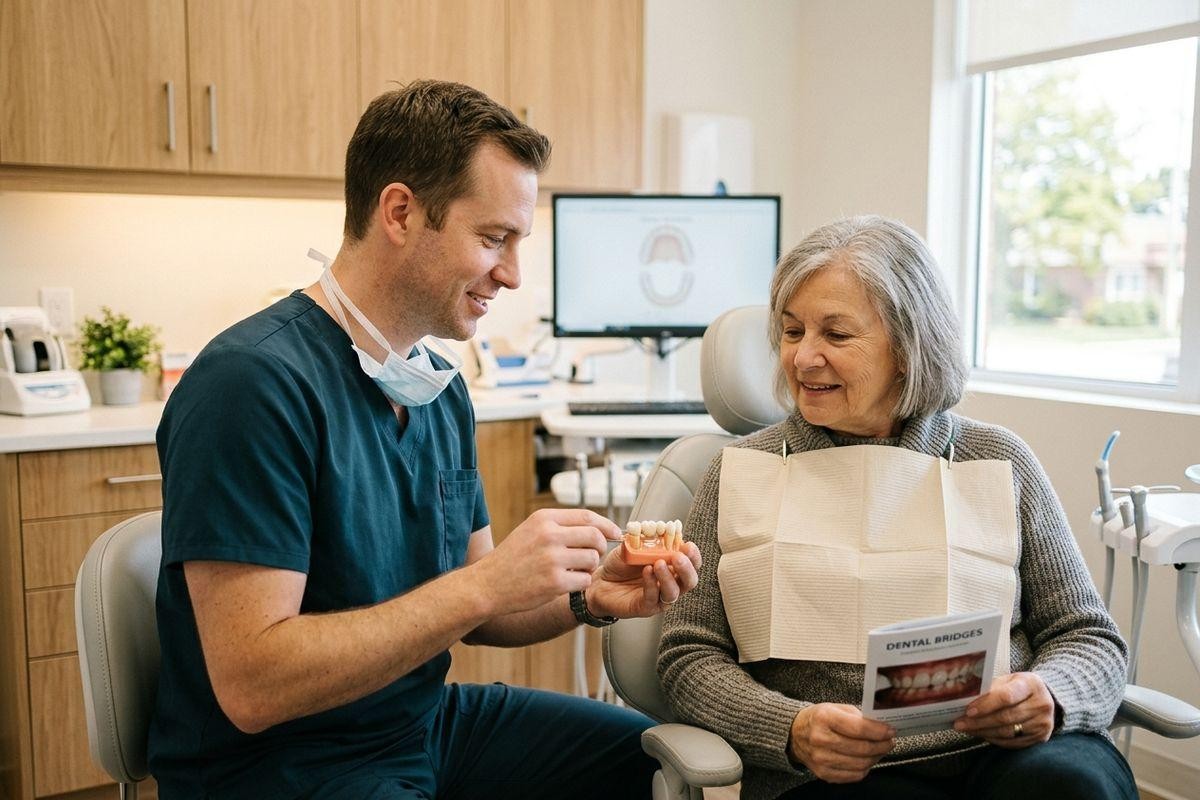
A dental bridge is a fixed replacement for a missing tooth, made up of a false tooth held in place by the healthy teeth on either side of the gap. Unlike a removable plate, a bridge stays put. You eat, talk, and brush with it just like your other teeth.
How a Dental Bridge Works
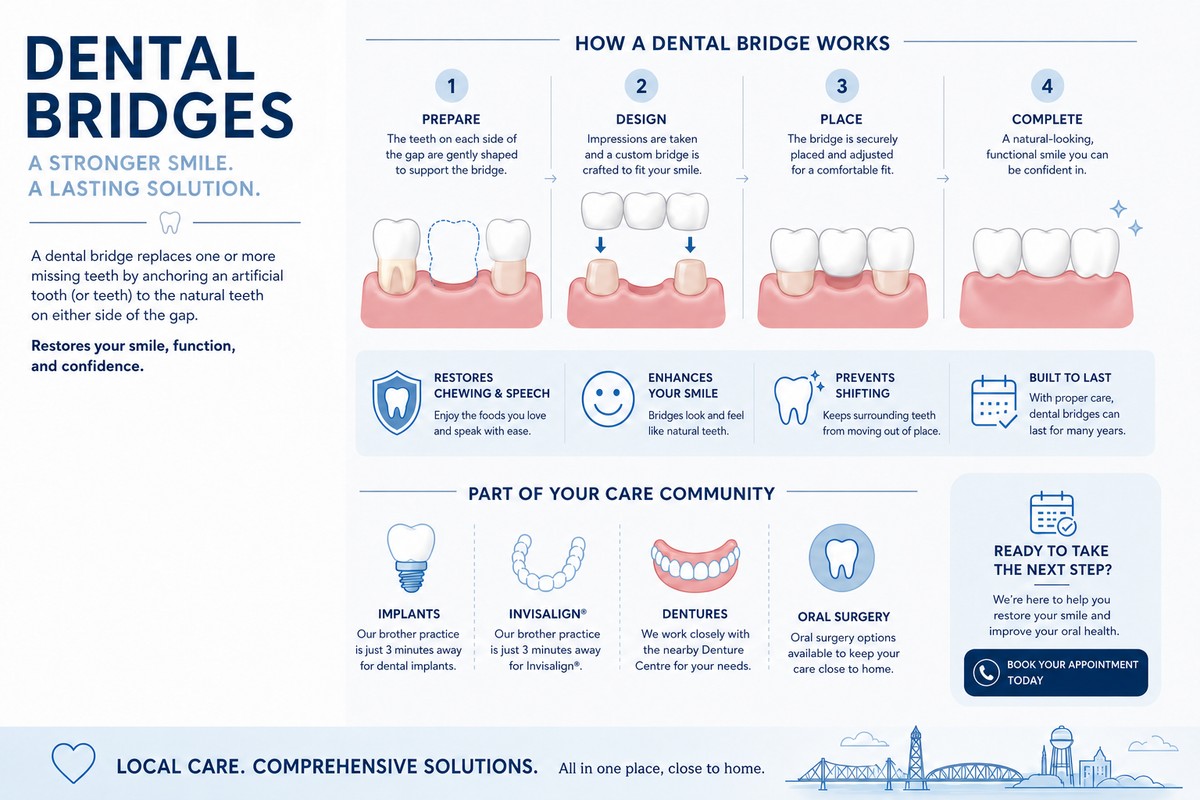
Getting a dental bridge is a straightforward process that usually happens over 2 appointments. Here’s the path from start to finish:
- The teeth next to the gap get shaped so they can hold crowns.
- Impressions get taken so the bridge fits the space and matches your bite.
- A dental lab builds the bridge to match the size, shape, and colour of your natural teeth.
- The finished bridge gets cemented into place during a second visit.
What to Expect During the Process
Comfort comes first. Local numbing helps keep the area comfortable while the teeth get prepared, so expect pressure at most, not sharp pain.
Between visits, a temporary bridge protects your gums and the shaped teeth underneath. It also lets you eat and smile normally while the lab builds the final piece.
Once the permanent bridge goes in, it may feel a little different for the first few days. That’s normal. Give your bite time to adjust to the new tooth.
Types of Dental Bridges
There’s no single style of bridge. The right one depends on where the gap sits and how strong the nearby teeth are.
Here’s a quick look at the main types:
- A traditional bridge uses healthy teeth on both sides of the gap to anchor the false tooth, a common choice for back teeth that handle daily chewing.
- A cantilever bridge anchors to a tooth on just one side of the gap instead of two.
- A Maryland bridge bonds to the back of the front teeth with small wings instead of full crowns, so it requires shaping less of the natural tooth.
- An implant-supported bridge anchors to posts placed in the jaw rather than natural teeth, an approach worth weighing against a traditional bridge if you’re missing several teeth in a row.
If you’re interested in an implant-supported bridge, our team can refer you to Garcia Dental, a nearby partner practice.
Benefits & Who May Need a Bridge
A gap does more than look like a missing tooth. The teeth around it can drift out of position, and chewing on one side of your mouth gets old fast.
A bridge can help in a few ways:
- It helps you chew comfortably and speak clearly again.
- It keeps the surrounding teeth from drifting into the open space.
- It supports the natural shape of your face where a gap once sat.
Most people with one or a few missing teeth and healthy teeth nearby make reasonable candidates for a bridge. Gum disease or weak supporting teeth may point you toward a different option instead, which is why a proper exam matters before you decide.
Bridge vs. Other Tooth Replacements
A bridge is a fixed choice, which sets it apart from removable dentures you take out at night. Dentures can replace more teeth at once and cost less upfront, but they don’t stay anchored the way a bridge does.
If a denture suits you better, a referral to a nearby denture centre can help you weigh that path. The goal is to match the replacement to your needs, not push you toward one option.
Care, Longevity & Local Support
A bridge asks for the same daily habits as natural teeth, plus one extra step. Brush twice a day, and floss underneath the false tooth using a floss threader so nothing builds up where you can’t see it.
Routine checkups help a bridge hold up over the years. They also give the team a chance to spot wear early and keep the supporting teeth healthy.
Skipping checkups or flossing underneath the bridge is usually what shortens its lifespan, not the bridge itself. A few extra minutes a day go a long way here.
Common Questions Answered
Many bridges last well over a decade with steady care, though the exact number depends on your habits and the health of the teeth holding it in place. If one wears down, dental bridges can often be replaced rather than requiring a completely different solution.
As for pain, local numbing keeps the appointment comfortable. Some tenderness afterward is normal and usually fades within a few days.
Cost varies depending on the type of bridge and how many teeth it needs to replace. A consultation is the best way to get a number that applies to your specific case rather than a general estimate.
Ready to Close the Gap?
A missing tooth doesn’t have to mean living with a gap, a changed bite, or foods you avoid. Grand West Dental has helped families restore their smiles with crowns and bridges since 1977.
Contact us today to book a visit and find out whether a dental bridge is the right fit for your smile.