Plaque starts rebuilding on your teeth within hours of brushing. Most of it comes off at home, though some settles along the gum line and hardens in spots a toothbrush can’t reach, which is where a professional cleaning does the heavy lifting.
For most people, a cleaning every 6 months keeps that buildup under control. Your own schedule may look different depending on your health, your daily habits, and how often you’ve dealt with cavities in the past.
Why 6 Months Works for Most People
Plaque turns hard fast. Within a couple of days, it sets into tartar, and no amount of careful brushing will remove it after that.
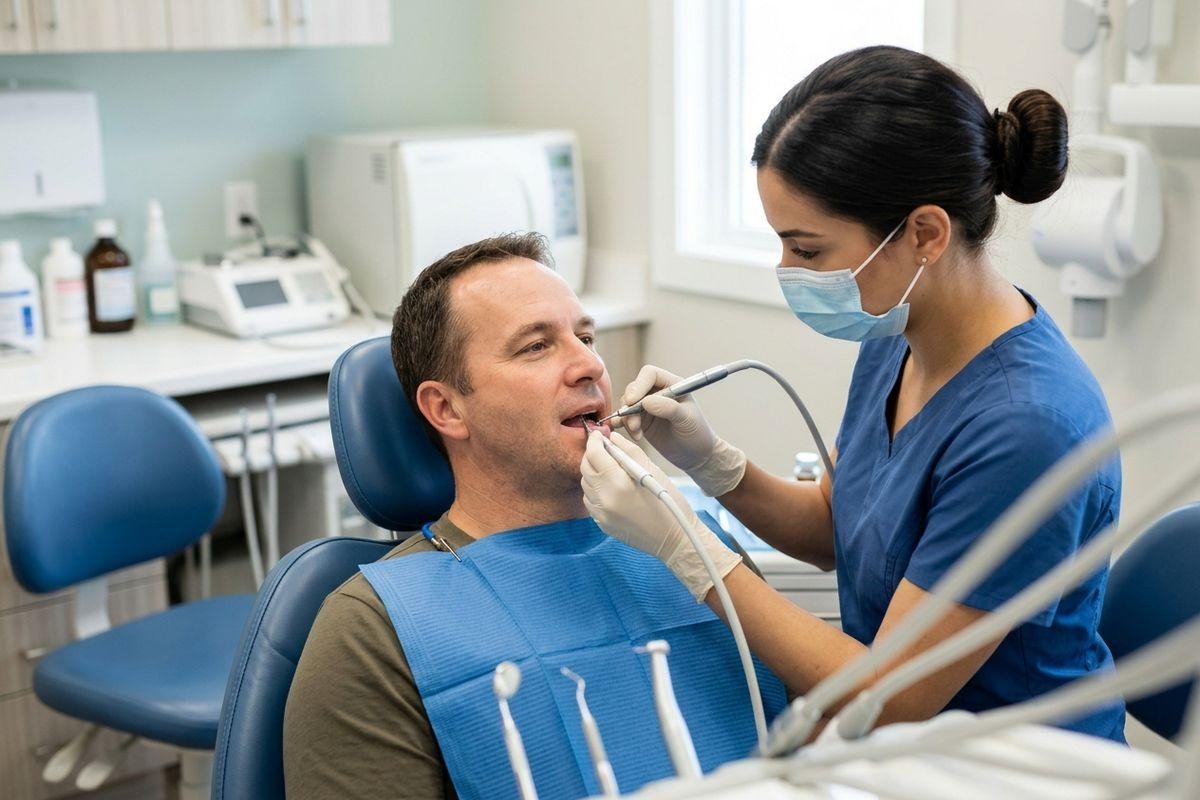
A hygienist removes it with professional instruments and polishes your teeth as needed. Fluoride sometimes follows, depending on your risk of decay.
Regular six-month visits give your dentist a chance to monitor changes over time and catch problems early. During an exam, your dentist can assess the gums around each tooth, check older fillings for cracks or wear, and examine the soft tissue in your cheeks and under your tongue.
Small problems stay small when someone finds them early. A small cavity is generally easier to treat before it reaches the deeper layers of the tooth. If decay progresses, treatment may become more involved, sometimes including a root canal if the inner part of the tooth is affected.
Health Conditions That Change Your Schedule
Certain health issues can affect your cleaning schedule, and your dentist may want to see you more frequently, sometimes every 3 or 4 months. Bring it up at your next visit if any of these apply to you:
- Gum disease, where buildup below the gum line may need to be removed regularly.
- Diabetes, which raises the risk of gum infection and can slow healing afterward.
- Dry mouth, since some medications reduce saliva and let bacteria multiply faster.
- Pregnancy, when hormone changes leave gums swollen and quick to bleed.
Habits That Speed Up Buildup
Your daily routine has as much to do with your schedule as anything on your medical chart. A few habits put extra strain on your teeth and gums:
- Smoking or using tobacco, which can affect gum health and make early signs harder to notice.
- A history of repeat cavities, which may mean you need closer monitoring between appointments.
- Sugary or acidic drinks sipped through the day, since every sip restarts the acid attack on enamel.
- Braces or clear aligners, which give plaque more edges and corners to hide behind.
Factors That Shape Your Cleaning Plan

No single schedule fits everyone. Age plays a role, from young children learning to brush to older adults managing dry mouth or worn enamel.
Home care counts for a lot. Brush and floss well, and you may have less buildup to remove at your next visit. Regular cleanings still matter because brushing and flossing cannot remove hardened tartar. Skip a stretch of days and tartar can collect behind the lower front teeth, near the openings of your salivary ducts.
Dental work can also affect your cleaning plan. Crowns and bridges, as well as implant restorations, can create areas that need extra attention, so your dentist may recommend closer monitoring when needed.
Signs You Should Book an Earlier Visit
Your mouth can show signs that it needs attention before your next scheduled cleaning. These changes are worth a dental assessment, even if your cleaning is not due yet:
- Gums that bleed when you brush or floss.
- Gums that look red, puffy, or tender along the edges.
- Bad breath that returns right after brushing.
- A rough, yellow band near the gum line that won’t brush away.
- Teeth that ache with cold water or sweet foods.
Recognizing these early can help you avoid a deeper problem and a longer treatment later on.
How to Care for Teeth Between Visits
Most of the work happens at home, and it doesn’t take long. Build your routine around 4 things:
- Brush twice a day for 2 minutes with a fluoride toothpaste.
- Floss once a day, including behind your back molars.
- Swap your toothbrush every 3 to 4 months, or sooner once the bristles splay.
- Rinse with water after coffee, pop, or citrus.
And go easy on the pressure when you brush. Scrubbing hard wears down enamel and irritates the gum line without removing any more plaque than a gentle, angled stroke.
Find the Schedule That Suits Your Teeth
Ask your dentist what interval makes sense for you, and adjust it as your health and habits change over the years. Six months is a starting point rather than a rule.
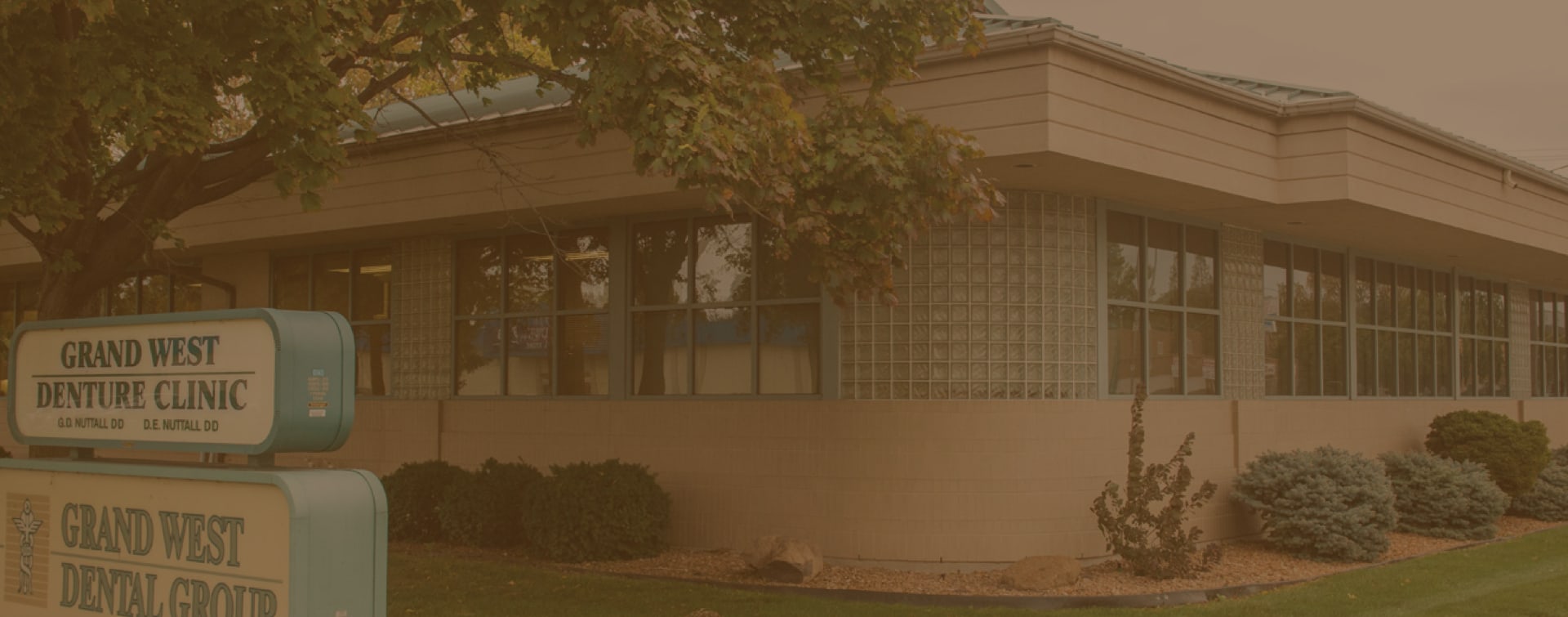
The team at Grand West Dental will check your gum pockets, look at how much tartar has collected since your last visit, and recommend an interval from there.
Book your next cleaning and bring your questions about timing along with you.