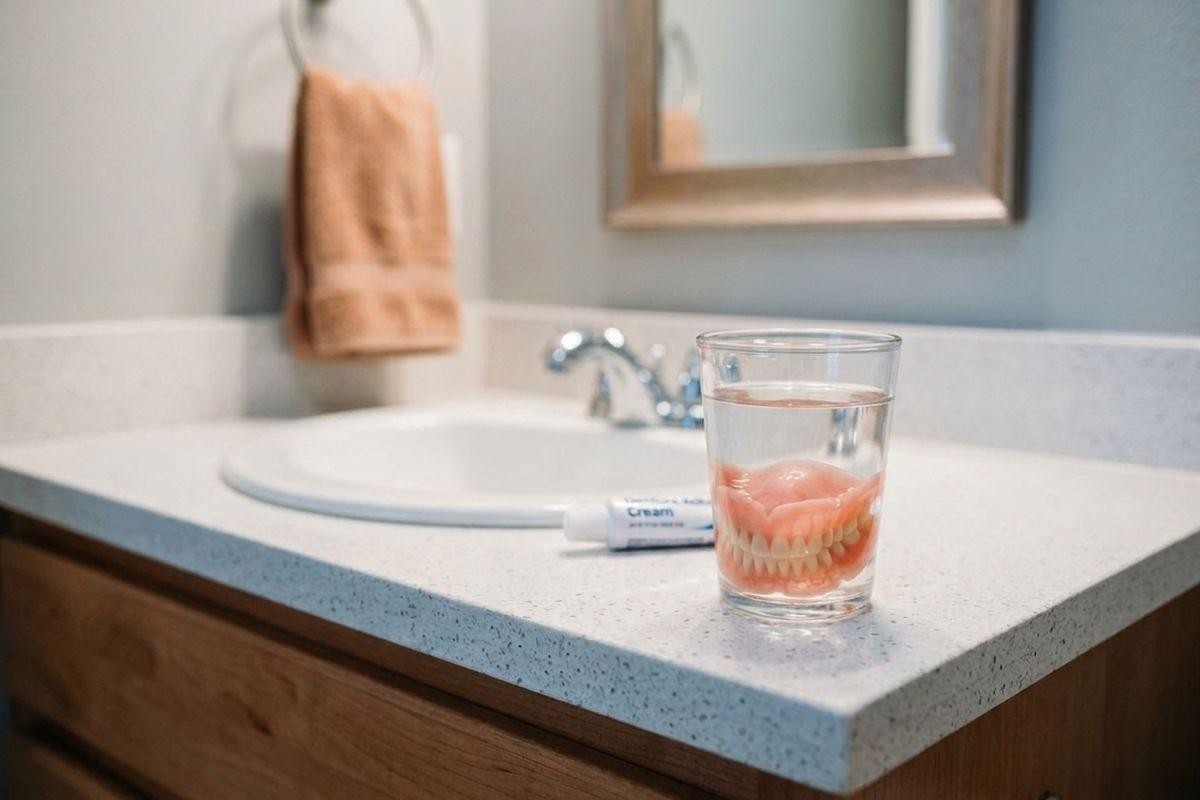
Your dentures were shaped to match your mouth on the day they were made. Your gums and jawbone keep changing after that, so the snug feeling you started with can fade over time.
That’s normal, and it’s usually fixable. When your dentures click, slip, rub your gums raw, or make familiar foods hard to chew, the fit has changed and it’s worth having them looked at. A well-cared-for set can serve you for years, so a loose fit rarely means starting from scratch.
How Poor Fit Affects Your Daily Life
A loose denture does more than annoy you at dinner. It can change how you sound and how you look, often before you notice the cause. Keep an eye out for these:
- Movement or slipping while you eat or talk
- Sore spots along the gums, or tissue that looks red and tender
- Trouble chewing foods you used to manage without thinking
- Reaching for more adhesive than you used to
- Food packing underneath the plate partway through a meal
Speech Changes to Watch For
Speech often gives it away before anything else does. Your tongue and lips work harder to shape sounds when the plate moves, and certain words come out differently as a result.
Listen for a new lisp or a whistle when you make an “s” sound. Extra saliva can show up too, which leaves you swallowing mid-sentence.
Most people adapt without noticing, so a spouse or a friend may pick up on the change before you do.
Changes to Your Face Shape
Dentures help support your cheeks and lips, so changes in the fit or the denture itself can affect that support over time.
If you notice a change in your appearance, a dentist or denturist can assess whether an adjustment, reline, or replacement would help.
Why Dentures Stop Fitting Over Time

Even a denture that fit well a few years ago can loosen. Your mouth keeps changing, and the denture itself takes daily wear. Several common factors can affect the fit:
- Bone loss in the ridge that once held your natural teeth, which slowly reshapes the surface your denture rests on
- Everyday wear on the acrylic and the denture teeth, which changes the way your bite meets
- A crack, chip, or past repair that alters how the plate seats
- Weight change or illness, either of which can alter the soft tissue in your mouth
None of this means you did anything wrong. It is part of how dentures and gums work together over the years.
Ways the Team Can Fix Your Fit
Many fit problems can be addressed with an adjustment, reline, or replacement. The team can often improve comfort without starting from scratch.
Adjustments & Relines
A reline reshapes the inside surface of your denture, so it matches your gums again. The right type depends on how your mouth feels. Your dentist or denturist may suggest one of a few approaches:
- A soft reline, which uses a pliable material to cushion tender or sensitive gums
- A hard reline, which restores a firmer hold and tends to last longer
- A spot adjustment, which relieves a single pressure point that keeps causing a sore spot
Talk with a dentist or denturist before using an at-home reline kit, since a poor application may make the fit harder to assess.
When a New Set Makes More Sense
Sometimes the denture itself has reached the end of its working life. Worn-down teeth, hairline cracks, and a history of repairs may point toward replacement rather than another reline.
Implant-supported dentures are worth asking about too. They attach to dental implants placed in the jaw, which can provide more stability while you eat and speak. Grand West Dental refers implant procedures to Garcia Dental and works with The Denture Center on the denture itself.
When to Visit Your Dentist or Denturist
You do not have to wait until a problem gets worse. A quick visit can catch small issues before they become daily frustrations. Reach out when you notice these changes:
- Sores or tenderness that stick around more than a few days
- A sudden change in how the denture seats
- Difficulty eating or speaking that keeps coming back
- Redness or a burning feeling on the roof of your mouth
Keep your regular exam on the calendar even if you have no natural teeth left. Your dentist can still check the health of your gums, tongue, and soft tissue, and assess the fit of your dentures when needed.
Let’s Sort Out That Fit
A denture that fits well should stay put while you eat and talk, without you thinking about it. If yours has stopped doing that, book a visit and have the fit assessed before the sore spots settle in.
Our team at Grand West Dental can check the fit and walk you through what each option actually involves, without any pressure to decide on the spot. There’s no better time to book your appointment and get back to enjoying your meals.